Book a partner call Estimate your credit Home

R&D credit studies, built by AI agents. Signed by you.R&D credit studies, assembled by AI agents and signed by us.

Your clients ask about the R&D credit, and you send them to a specialist firm that takes the fee and sometimes the client. With TaxVantage, agents build the study from your client’s records and you sign it, for one annual license and no share of your fee.

You know your team’s work likely qualifies for the R&D credit, but the paperwork, and now Section G, keeps putting you off. Occams Advisory’s licensed tax professionals prepare your study with AI agents and sign it, for $2,500 to start plus 18% of the credit you receive.

Licenses from $6,000 a year. Founding pricing: 25% off year one for the first 10 firms.

Nothing is billed until you approve the engagement.

Who signsYou, alwaysA licensed tax professional
Our share of your feeNone
What you pay$2,500 + 18% of the credit
How you payOne annual license
What you sendExports you already have
  • §7216 consent before upload
  • Encrypted in transit and at rest
  • Never used to train shared models

Built by Occams Advisory

A U.S. advisory firm for founders and business owners.

Inc. 500010 times

Fastest-growing private companies in America, 10 times since 2016

Financial Times6 times

The Americas’ Fastest-Growing Companies, 6 times since 2020

Fortune2023 and 2026

America’s Most Innovative Companies, 2023 and 2026

Recognitions of Occams Advisory, the company behind TaxVantage. Source: occamsadvisory.com/awards.

The R&D credit, by the numbers

The latest figures from U.S. government sources.

$189B
in federal R&D credits expected over fiscal years 2025 to 2029
Joint Committee on Taxation, JCX-45-25, December 2025
$722B
spent on R&D performed by U.S. businesses in 2023
National Science Foundation, NSF 25-353, September 2025
$381M
in research credits small businesses claimed against payroll taxes for 2024
Treasury Inspector General for Tax Administration, report 2026-408-012, April 2026

Why firms are bringing R&D work in house now

The credit is getting harder to document, clients are paying outsiders to do it, and the work fits naturally next to the return you already prepare.

Refer to a specialist
$19,236 to $38,472
Goes to the specialist on a $96,180 credit, at a typical 20 to 40%
  • ✕Who owns the client: shared, often lost
  • ✕Who keeps the fee: the specialist, with a referral share to you
  • ✕Section G handling: the specialist’s process
  • ✕Who signs: you, on someone else’s work
Keep it in house with TaxVantage
$0
TaxVantage share of your fee. One annual license for the firm. Your fee is your decision.
  • ✓Who owns the client: you
  • ✓Who keeps the fee: you, in full
  • ✓Section G handling: built and checked automatically
  • ✓Who signs: you, on work you reviewed line by line
Licenses from $6,000 a year. See plans and inclusions
2027

Section G is no longer optional

Above $1.5 million of qualified research expenses or $50 million of gross receipts, the business components behind at least 80% of the claim must be listed on the return, with their costs. Detail that used to wait for an examination now goes in at filing.

IRS news release IR-2025-99; Form 6765 instructions, February 2026.

20 to 40%

What clients pay specialists today

Specialty credit firms commonly take a fifth or more of the credit on contingency, and some take 40%. With TaxVantage that work stays inside your firm, priced as you decide.

Published fees: 20% at the low end; 25 to 40% according to Swanson Reed’s fee guide (April 2026).

38

States with their own credit

Each state applies its own base, limits and carryforward rules. The platform calculates every applicable state from the same federal allocation.

Aprio, August 2025. State rules change; confirm each state for the year.

How much can your company claim?

The R&D tax credit pays back part of what your company spends developing or improving software, products and processes. Enter last year’s spend for a rough number, then see exactly what you would pay us.

$
What you keep
$46,700 to $63,100
Estimated federal credit $60,000 to $80,000. Our fee ($2,500 + 18%) $13,300 to $16,900.
Start my study

A rough range: the federal credit is usually about 6 to 8% of this spend. State credits are extra. Your study sets the real number. Nothing is billed until you approve the engagement.

What you pay

$2,500 to start, plus 18% of the credit you receive. On a $100,000 credit, you pay $20,500 in total.

Who signs it

A licensed tax professional at Occams Advisory.

When you get the money

As a lower income tax bill on the return that claims it. Companies with under $5 million in revenue, and no more than five years of revenue, can instead use up to $500,000 a year against payroll taxes, starting the quarter after they file.

What a study is

The file that backs up your claim: which projects qualify, whose time and which costs count, and your Section G schedule. Your CPA files it with your return on Form 6765.

What we need from you

Exports from your payroll, accounting and project tools. No long interviews.

If the IRS has questions

We help you answer them for any study we prepare.

Seven agents do the assembly. Your firm makes the calls.One practitioner makes the calls.

Each agent has a narrow job, works from source records rather than surveys, and hands anything that needs professional judgment to your reviewera licensed tax professional, with the evidence attached.

  1. Agent 1

    Intake

    Reads payroll, ledger, time and project exports in whatever form the client has, and normalizes them into one dataset.

    Hands off whena file is incomplete or inconsistent
  2. Agent 2

    Scoping

    Proposes business components from tickets, repositories, specifications and project codes, and links people to the work they did.

    Hands off whencomponent boundaries are ambiguous
  3. Agent 3

    Qualification

    Tests each component against the four-part test and records the uncertainty, the process of experimentation and the evidence for each.

    Hands off whena component is close to the line
  4. Agent 4

    Allocation

    Splits wages across direct research, supervision and support, maps supplies and cloud costs, and applies the 65% limit to contract research.

    Hands off whenan allocation rests on an estimate
  5. Agent 5

    Section G builder

    Builds the business component table line by line, checks the 80% coverage rule and the 50-component cap, and keeps it in step with the calculation.

    Hands off whencoverage falls short
  6. Agent 6

    Narrative and evidence

    Drafts technical narratives for each component and links every figure in the study to the record it came from.

    Hands off whenevidence for a claim is thin
  7. Agent 7

    Reviewer

    Checks the whole package for internal consistency, prior-year variances and common examination triggers before it reaches the professional.

    Hands off whenit finds anything, with its reason
  8. Your licensed professionalLicensed, at Occams Advisory

    Your firmYour tax professional

    Your professional decides every flagged item, chooses the elections and signs the study. Nothing is final without their approval.A licensed tax professional at Occams Advisory decides every flagged item, chooses the elections and signs your study. Nothing is final without their approval.

    Final authority onevery figure and every word

The agents prepare. You decide and sign.

The line between software and professional judgment is drawn deliberately, and it never moves.

What the platform does

Everything that is gathering, mapping and drafting

  • Collect and normalize client records from exports or connected systems
  • Propose and test business components against the four-part test
  • Allocate wages, supplies, cloud and contract research
  • Build Section G and keep it consistent with the calculation
  • Calculate the federal credit and every applicable state credit
  • Draft narratives and keep a complete, timestamped evidence trail
What you do

Everything that is judgment, responsibility and relationship

  • Agree scope and fee with the client
  • Decide every item the agents route to you
  • Choose the method and elections
  • Review and adjust the final calculation
  • Sign the return as preparer of record
  • Own the client relationship from first call to examination

TaxVantage never prepares or signs a tax return. Every study is reviewed and signed by the licensed practitioner who holds the engagement.

How one study moves through your firmHow one study moves through the platform

Five steps from setup to a signed study. The agents do the assembly; your professional makes every call that needs judgment.Five steps from a first call to a signed study. The agents do the assembly; a licensed tax professional makes every call that needs judgment.

  1. Book a partner call

    We walk through the platform with your team and set up your firm’s license. Setup is planned for week one, training for week two and your first live client for weeks two to four.

  2. Client consent and upload

    Your client gives the §7216 consent the rules require, then you or they upload exports from payroll, accounting and project tools. No templates to fill in.

  3. Agents assemble the draft

    The agents build a complete first draft once the data is in, and send open questions to your reviewer with the evidence attached.

  4. Your firm decides and signs

    Your professional decides each flagged item from the records behind it, then signs the study. Your client approves the final numbers.

  5. File, and defend if asked

    Your firm files Form 6765 with the return. If the IRS asks questions, the evidence is already organized by project.

  1. Tell us about your company

    A short call confirms whether your work is likely to qualify. Nothing is billed until you approve the engagement.

  2. Consent and upload

    You give the §7216 consent the rules require, then upload exports from payroll, accounting and project tools. No templates to fill in.

  3. Agents assemble the draft

    The agents build a complete first draft once the data is in, and send open questions to your tax professional or to you.

  4. A licensed professional signs

    An Occams Advisory tax professional decides each flagged item from the records behind it, then signs the study. You approve the final numbers.

  5. File, and defend if asked

    Your CPA files Form 6765 with your return. If the IRS asks questions, the evidence is already organized by project.

Sample study, Client 0417Illustrative
Harbor & Pine CPAs
R&D credit study, tax year 2026
Ready for your signature
Your fee
Set by your firm
TaxVantage share
None
Reviewer
Your licensed professional
Assigned
✓§7216 consent recorded before the first upload
Sample study, Client 0417Illustrative
Occams Advisory
R&D credit study, tax year 2026
Ready for your approval
Fee
$2,500 to start, plus 18% of the credit you receive
Billing
Nothing is billed until you approve the engagement
Your tax professional
Licensed, at Occams Advisory
Assigned
✓§7216 consent recorded before the first upload

See it on a sample study.

We walk your team through a sample study, the review queue and Section G.

See what your company could claim.

Get a rough range in a minute, then start your study. Nothing is billed until you approve the engagement.

White label · Firm and Enterprise

Your clients see your firm. Only your firm.

At the Firm and White-Label Enterprise tiers, every deliverable, portal screen and client email carries your name. Type yours to see the study cover.

Branding level

Your brand only, on every deliverable.

Brand color
Book a partner call

On the call, we run a sample study under your firm’s name.

  • No share of your feeOne annual license. What you charge your client is your decision.
  • No outreach to your clientsTaxVantage never markets to them. Portal messages go out under your firm’s name.
  • Your client, start to finishFrom the first call to an examination, the relationship stays with your firm.
New for 2026 returns

Section G, explained and checked

From 2026 tax years, most companies claiming the credit must list each research project (the IRS calls them business components) and its costs in Section G of Form 6765. TaxVantage builds it as part of every study. Check whether it applies.

80%

Reported business components must account for at least 80 percent of total qualified research expenses.

50

Reporting is capped at 50 business components, starting from the largest.

3 ways

Wages are reported by component and split across direct research, supervision and support.

2027

The first filing season it is required, for 2026 returns.

Sources: IRS news release IR-2025-99 (October 2025) and the Form 6765 instructions (February 2026).

Does Section G apply?

4 questions
Is this an original return or an amended one?
Are qualified research costs above $1.5 million?
Are average yearly gross receipts above $50 million?
Is this a small business using the credit against payroll taxes?
Optional

Section G is optional.

Qualified research expenses are at or below $1.5 million and gross receipts at or below $50 million on an original return. Completing it anyway can strengthen the file.

A screening aid, not a determination. Confirm against the Form 6765 instructions for the tax year.Book a partner callStart my study

Four ways to handle an R&D client

Most firms do one of the first three today. Here is how they compare on the things a practice owner cares about.

Question Refer to a specialist Build it in spreadsheets Per-company software TaxVantage license
Who owns the client Shared, often lost You Often the software vendor You
Who keeps the fee The specialist, with a referral share to you You The vendor charges the client directly You, in full
Cost basis Commonly 20 to 40% of the credit Staff hours Per company, per year One annual license for the firm
Section G handling The specialist’s process Manual and time-consuming Varies Built and checked automatically
Your brand on deliverables No Yes No Yes, from the Firm tier
Who signs You, on someone else’s work You Varies You, on work you reviewed line by line

One annual license, paid upfront

Priced on how many studies your firm runs, never on the size of your clients’ credits, and we take no share of your fee. A study is one entity for one tax year: federal, every applicable state and Section G. Entities with more than 250 employees carrying QREs count as two studies.

Two-year prepayment takes 10% off both years.

Founding partners

25% off year one and the same price in year two, plus your first live study reviewed by a specialist at no charge, in return for a published case study. Open to the first 10 firms for three months from launch.

Book a partner call

Solo

For a practitioner adding R&D to a small book

$6,000per year

5 studies included · $1,200 per included study

  • Additional studies $1,500
  • 2 practitioner seats
  • Client portal and §7216 consent flow
  • Section G builder and checker
  • Federal and every applicable state
Start with Solo

Practice

For firms with a handful of R&D clients

$18,000per year

20 studies included · $900 per included study

  • Additional studies $1,100
  • 5 practitioner seats
  • Co-branded deliverables
  • Guided setup
  • Section G builder and checker
Choose Practice

Firm

For firms building a credits practice

$42,000per year

60 studies included · $700 per included study

  • Additional studies $850
  • 15 practitioner seats
  • Your brand on every deliverable
  • 5 specialist reviews included
  • Single sign-on and team training
Choose Firm
White label

Enterprise

For platforms, PE-backed groups and credit specialists

$100,000per year

200 studies included · $500 per included study

  • Additional studies $600
  • Unlimited seats and offices
  • Full white label on your domain
  • 20 specialist reviews included
  • API access and a named partner lead
Talk to us about Enterprise
Compare every feature 13 rows across the four licenses
Full feature comparison by license
Feature Solo Practice Firm Enterprise
Annual license $6,000 $18,000 $42,000 $100,000
Studies included 5 20 60 200
Additional studies $1,500 $1,100 $850 $600
Practitioner seats 2 5 15 Unlimited
Deliverables carry TaxVantage branding Your firm and TaxVantage Your firm’s brand Your brand only, on your domain
Client portal and §7216 consent Included Included Included Included
Section G builder and checker Included Included Included Included
State credit calculations Included Included Included Included
Specialist second review $750 per study $750 per study 5 included, then $750 20 included, then $600
Multi-office administration No No No Yes
Single sign-on No No Yes Yes
API access No No No Yes
Onboarding Self-serve Guided setup Guided setup and team training Named partner lead
$750 per study

Specialist second review

A TaxVantage tax specialist reviews the study before you sign. Advisory only; the decisions remain yours.

Quoted per matter

Examination support

Help assembling responses to IRS information requests, working alongside the practitioner of record.

Free

Section G checker and estimates

Unlimited screenings and preliminary credit estimates for prospects, on every tier and for non-licensees.

Unused studies roll forward for twelve months, so a slow season never costs you capacity.

Upgrade at any time. The unused portion of your current license is credited toward the new tier.

Model your firm’s economics

Enter your volume and the fee you charge. The calculator picks the lowest-cost tier.

Your fee is your decision and your engagement. Use what you charge now or plan to.

Apply discounts
Practice fits best

Annual license
Additional studies
Discounts
Total platform cost
Cost per study
Studies to cover the license
Study revenue at your fee
Margin before review time

Excludes optional specialist reviews. Discounts apply to the license and additional studies.

Book a call about Practice

From signed license to first signed study

The onboarding plan for founding partners, built so your first R&D client is on the platform before busy season.

  1. Week 1

    License and setup

    Seats created, branding applied, consent language reviewed against your engagement letter.

  2. Week 2

    Practitioner training

    A working session on the review queue, elections and Section G, using an anonymized sample file.

  3. Weeks 2 to 4

    First live client

    Your first engagement runs with a TaxVantage specialist alongside, at no charge for the review.

  4. Ongoing

    Pipeline from your book

    Run the Section G checker and estimates across your existing clients to find the R&D work already there.

Built for the payroll and tax data you share

You are trusting us with payroll and tax information. This is how the platform handles it.

Consent before upload

The portal captures the §7216 consent the rules require before any return information is shared.

One client, one purpose

A client’s data is used only to prepare that client’s study and is never used to train shared models.

Every access logged

Access is role-based, and the platform records who opened which record and when.

Encrypted throughout

Data is encrypted in transit and at rest, and exports leave the platform only on the practitioner’s instruction.

The people behind the platform

Founded by the team behind Occams Advisory, with tax, technology and finance leadership held to one standard of review.

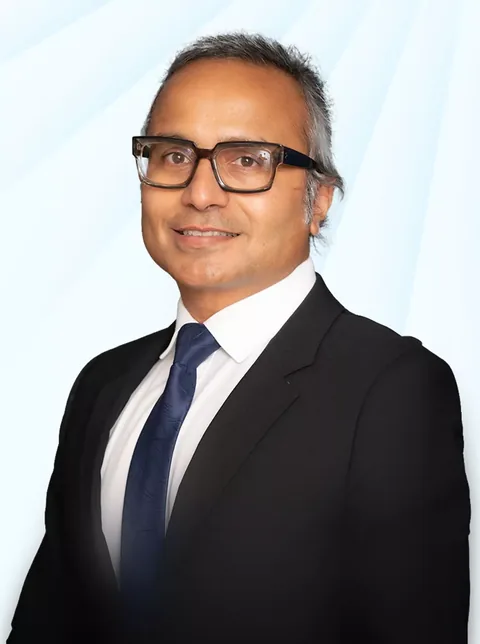
Portrait of Anupam Satyasheel

Anupam Satyasheel

Founder and Chief Executive Officer

Founded Occams Advisory after a Wall Street career at Barclays, Bank of America Merrill Lynch and The Bank of Nova Scotia. MBA, NYU Stern.

LinkedIn profile for Anupam Satyasheel
Portrait of Nitin Aggarwal

Nitin Aggarwal

Co-founder and Chief Technology Officer

Serial founder and the architect of the platform and its agents. Built Occams’ Equipay platform; founded and scaled 247 Experts. B.Tech, IIIT Allahabad; AGMP, IIM Ahmedabad.

LinkedIn profile for Nitin Aggarwal
Portrait of Rajat Garg

Rajat Garg

Chief Administrative Officer

Leads reporting, compliance and cross-border structuring. Fellow of the Institute of Chartered Accountants of India, with more than a decade in financial reporting, taxation and audit.

LinkedIn profile for Rajat Garg
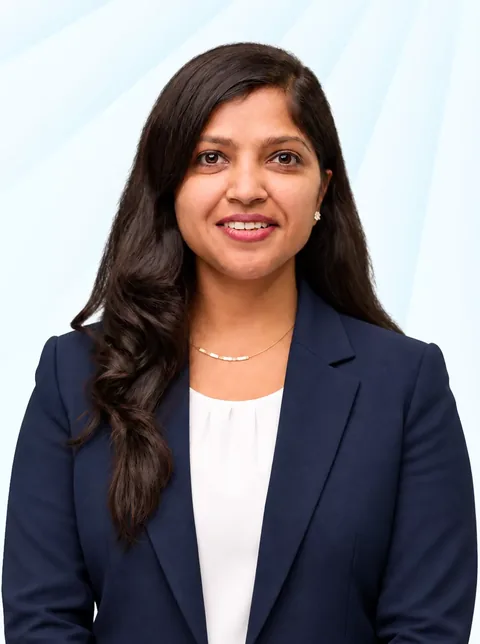
Portrait of Priyanka Bathwal

Priyanka Bathwal

Chief Tax Officer

Owns the tax method and the review standard every study on the platform is built to meet. Chartered Accountant in India who passed the U.S. CPA exam; in tax and audit since 2004.

LinkedIn profile for Priyanka Bathwal

Questions firms ask firstQuestions founders ask first

If yours isn’t here, call +1 443-720-2000.

See it on a sample study

We walk your team through a sample study and the review queue.

Book a partner call

Ready for a real number?

Get a rough range in a minute, then start your study. Nothing is billed until you approve the engagement.

Estimate your credit
Who signs the study?

You do. The agents build the study, the Section G detail and the Form 6765 workpapers, and send every judgment call to your reviewer. Your firm decides each flagged item and signs. The software never signs anything.

Does TaxVantage take a share of my fee?

No. Your firm pays one annual license, and the fee you charge your client is your decision. TaxVantage takes no share of it.

What does the license cost?

There are four annual licenses, paid upfront: Solo at $6,000 with 5 studies included, Practice at $18,000 with 20, Firm at $42,000 with 60, and Enterprise at $100,000 with 200. Additional studies cost $1,500, $1,100, $850 and $600 respectively. Prepaying two years takes 10% off both years. The first 10 founding partner firms get 25% off year one and the same price in year two.

What does the license include?

Each study covers one entity for one tax year: the federal calculation, every applicable state, the Section G schedule, technical narratives, the evidence index and the workpapers that support Form 6765. Seats, branding, specialist reviews and onboarding scale by tier, from 2 seats on Solo to unlimited seats on Enterprise. Compare plans.

How is client data handled?

The portal captures the §7216 consent the rules require before any return information is shared. A client’s data is used only to prepare that client’s study, is never used to train shared models, and is encrypted in transit and at rest.

What is the R&D tax credit, and does my company qualify?

The federal research credit (Section 41 of the tax code) rewards U.S. companies for work that develops or improves a product, process or software, relies on engineering or science, and involves trying alternatives to solve a technical problem. Pay for the people doing that work, supplies, cloud computing used for it and 65% of contractor costs count toward the credit, which is claimed on Form 6765 with the tax return.

How much is the R&D tax credit worth?

The federal credit is usually about 6 to 8% of what a company spends on qualifying research, depending on how that spending has grown, and many states add their own credit. Companies with under $5 million in revenue and no more than five years of revenue can use up to $500,000 a year of the federal credit against payroll taxes, so it also helps companies that are not yet profitable.

How much does TaxVantage cost for a company?

$2,500 to start, plus 18% of the credit you receive. On a $100,000 credit you pay $20,500 in total. Occams Advisory’s licensed tax professionals prepare and sign the study.

What is an R&D credit study?

The file that backs up your claim. It shows which projects pass the IRS four-part test, whose time and which costs count, and the Section G schedule, with every figure linked to the record it came from. Your CPA uses it to complete Form 6765 with your return.

Who prepares and signs my study?

AI agents gather your records, match them to projects and draft the study. A licensed tax professional at Occams Advisory decides every judgment call and signs it. The software never signs anything.

When do we get the money?

As a lower federal income tax bill on the return that claims the credit. Companies with under $5 million in gross receipts, and no gross receipts before the last five years, can instead elect to use up to $500,000 a year against payroll taxes, starting with the first quarter after they file that return.

How far back can you claim R&D tax credits?

Generally you can amend returns for tax years that are still open, usually the last three years, to claim credits you missed. Refund claims for the research credit must include specific supporting details, so each past year is prepared as its own study.

Become one of 10 founding partner firms.

Open to the first 10 firms for three months from launch. Founding partners shape the platform in its first year, lock founding pricing for two years and work with a named partner lead from day one.

What founding partners receive

  • 25% off the first year and the same price in year two
  • Your first live study reviewed by a specialist at no charge
  • A direct line into the product roadmap
  • Recognition as a founding partner, if you want it

What we ask in return

  • A published case study after your first season
  • Candid feedback, every month of year one

Prefer to talk? Call +1 443-720-2000.

Book a partner call

Thirty minutes on your clients, your volume and the licence that fits.

We use these details only to arrange the call. Privacy policy (opens in a new tab)

Ready to claim your credit?

Tell us a little about your company. A tax professional from Occams Advisory will confirm whether you qualify and walk you through what happens next.

  1. 1Verify your email with the code we send, and your TaxVantage account is created.
  2. 2A tax professional from Occams Advisory confirms whether your work is likely to qualify. Nothing is billed before you approve the engagement.
  3. 3You upload exports you already have; the agents draft the study and a licensed professional signs it.

Prefer to talk? Call +1 443-720-2000.

Speak to an expert